A practical framework for national implementation
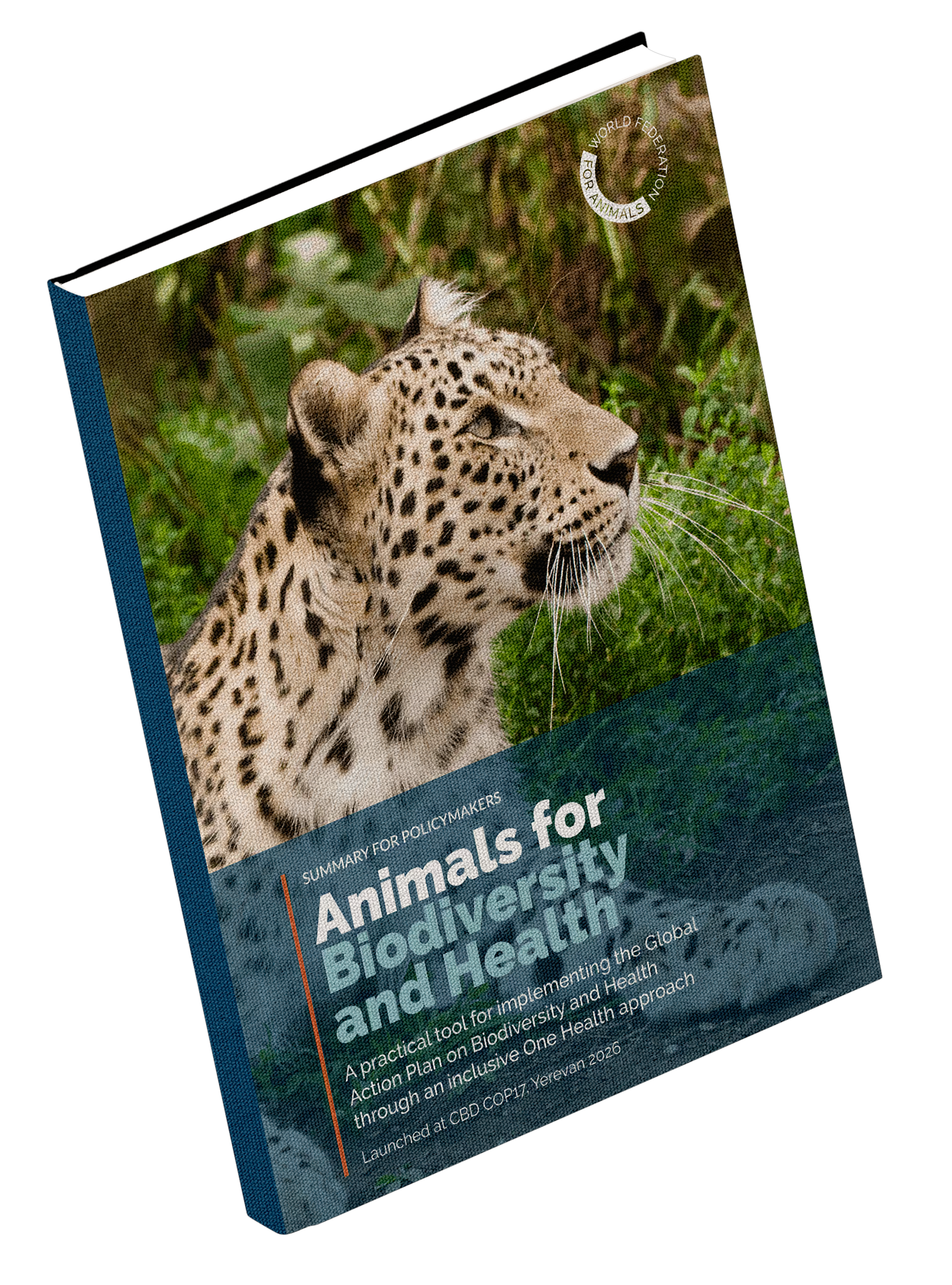
The guidance tool supports national implementation of the Global Action Plan of Biodiversity and Health (GAPBH) and contributes to the Sustainable Development Goals, the Kunming-Montreal Global Biodiversity Framework, and the prevention and One Health objectives of the WHO Pandemic Agreement.
Explore its 22 policy measures, which set out a recommended policy option, common challenges and ways to overcome them, indicators to track progress, and case studies of policies already in place or that are emerging.
Download summary for policymakersThe ‘Animals for Biodiversity and Health’ guidance tool for policymakers has been developed in consultation with technical reviewers involving University College London, the World Organisation for Animal Health, the Sustainable Use Transformative Partnership Platform hosted by the Landscape Alliance (CIFOR-ICRAF), and the Chico Mendes Institute for Biodiversity Conservation. It has been developed by the World Federation for Animals -with special contributions from Animal Protection Denmark, Eurogroup for Animals, and World Animal Protection– and the Born Free Foundation.
Key messages from the guidance tool
Animals are at the heart of the biodiversity–health nexus.
How wild animals are captured, traded, farmed and conserved, and how farmed animals are managed and kept, shapes the risk of pathogen spillover, the prevalence of antimicrobial resistance (AMR), pressure on ecosystems, and resilience to climate change.
Wild animals also pollinate, disperse seeds, and cycle nutrients and carbon; therefore, plans, cities and infrastructure should protect them and the ecosystem functions they provide.
The GAPBH gives Parties a clear, voluntary mandate to act.
The Plan calls for wildlife use and trade to be sustainable and safe for human and wildlife health, improved standards of animal welfare in farm systems to reduce communicable disease and prevent AMR, and the integration of climate, biodiversity and health interlinkages into national policy.
Measures from this guidance tool can be taken up through National Biodiversity Strategies and Action Plans (NBSAPs), One Health strategies, AMR national action plans, climate plans, and through wildlife, agriculture, food, and urban planning policies.
Animal health and welfare is a practical, effective lever.
Reducing stress and injury, overcrowding, poor hygiene, and the mixing of species lowers disease susceptibility, the need for routine antimicrobials, and opportunities for pathogens to spread.
Include animal health and welfare expertise in One Health platforms, invest in veterinary capacity, and co-design measures with full and effective participation of Indigenous Peoples, local communities and those most affected, respecting customary sustainable use, rights and food security, while remaining within ecological limits and ensuring compatibility with long-term biodiversity conservation, animal health, and community wellbeing.
Official launch at CBD COP 17
Putting animal health & welfare at the heart of biodiversity action
WFA and the Born Free Foundation officially launched the tool at COP17 in Yerevan, Armenia. The launch events featured high-level representation from France’s Ministry of Agriculture and Food Sovereignty, the World Organisation for Animal Health (WOAH), and the Chico Mendes Institute for Biodiversity Conservation.